Commentary
“Can you blow out those stinky candles?” my friend asked.
I was shocked because I had only recently gained an enthusiasm for lighting candles around the house. They are newly fashionable these days, as I’m sure you know. You find rows of them at the grocery and pharmacy. Fortunes are being made selling them, all shapes and sizes. The trend seems part of a larger push to rediscover the old ways and capture an aesthetic born of the elements rather than digits.
As it turns out, however, the complicated smells being thrown by my candle caused my friend’s allergies to act up. I complied but later wondered what was going on. It turns out that there is quite a concern out there that stinky candles are emitting into the air various chemicals that are unwelcome by our respiratory systems and bodies.
I found this a bit demoralizing and discouraging of my newfound enthusiasm.
Asking around, I spoke to a number of “health nuts”—people whose views I once dismissed—who completely concurred. Not all candles are made the same. These paraffin and sow candles are packed with artificial smells and chemicals that spoil the air in ways that are indiscernible to some but painful to others.
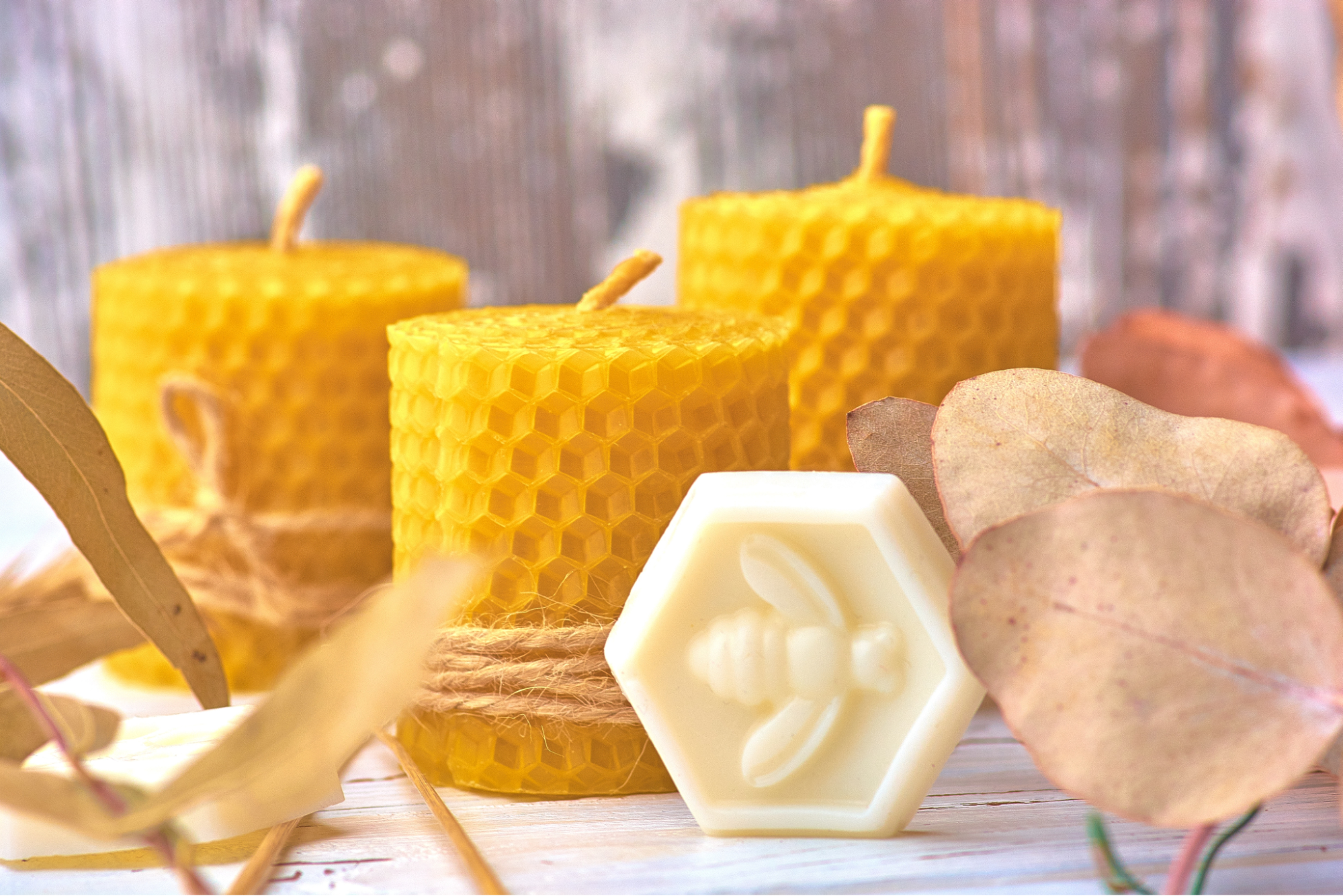
One friend explained to me that the only safe bet in candles is beeswax. I had a sense that this was wrong. I’ve seen these in action before and they produce a giant gloppy mess that you have to clean. Surely technology has improved on them.
To be sure, there is some delight in cleaning wax, especially when it involves ironing the fabric with a piece of brown paper on top and watching the magic transfer from one surface to another.
But really, who has time to clean wax? Surely the innovation here of petroleum products in candles (19th century) and all these vegetable and grain mixes (1990s) are a safer way to go. Less wax, longer burning times, less stress.
So the matter sat for nearly half a year until I began to think more about this. How many new products have replaced the old with the promise of more convenience and ease of care? Nearly every natural fiber has been replaced with some petroleum thing (polyester, acrylic, or a hundred other names) but always with inferior results. The promise is never matched by reality.
I long ago insisted on all cotton for shirts and all wool for suits. My sheets go one further with all linen, and it’s the same with my tablecloths, napkins, and towels.
Why should I think it would be different with candles? Surely there is a way to make beeswax work for lighting rooms. After all, this was the way all candles have been made from the beginning of recorded history until relatively recently. These days, nearly every candle you can buy at the store, with their thousands or scents, are made with artificial ingredients.
How about an experiment? Fine, I’m there. Here we go.
You can pick up beeswax candlesticks for a dinner table for a song so I did it. They run about $1.50 each even now.
They feel completely different and also have a beautiful look. They feel like wax and not plastic. That’s a good sign. And they easily press into the candlesticks because the wax is more malleable. Already I’m impressed.
Before attempting the switch, I did some research. There are four crucial conditions that must be met.
First, the candle must be straight up and down and not leaning at all. You can use a level but that’s a bit much.
Second, the wick must be trimmed to a quarter inch before lighting.
Third, they must be burned an hour or more and not be blown out too soon for reasons having to do with the way the wax pools just beneath the flame.
Fourth, you must have no breezes blowing in the air.
All conditions met, I was ready to take flight on the grand experiment. Once lit, I shut down the electric lights and observed. What I saw was pure magic. The flame is a different color from other candles, more natural, more like the sun.
The flame itself is shapely, kind of like what you see in a painting by Vermeer. You can look at it carefully. You see a nearly effervescent and translucent portion near the base that converts into solid fire as your eyes rise up. It’s stable in appearance and stunningly complicated, like a work of art.
The light this produces is indescribable, obviously very different from paraffin and soy. It seems more natural. As for the scent, it is subtle, a light honey smell that you only notice once you become conscious of it.
Ten minutes deep into this experience, I was overjoyed. No drips. No smoke. No instability. Nothing was burning quickly. It seems nearly like a living presence, like a pet or a child, alive and comforting, or maybe like a guest you invited in who belonged there all along.
The more interesting effect was cultural, sociological, psychological. I was suddenly speaking softly only because I briefly noticed that the candle seemed to respond to my breath and dance. Even a rapid arm movement caused disturbance beyond comfort and I decided not to test my luck so far.
I didn’t want to interrupt its equilibrium. I started moving more carefully through the room, sitting with more deliberation, and moving in a chair with patience and gentleness. The whole room suddenly seemed devoted to one end only: the service of this beautiful flame.
There must be no clapping, no reckless guffaws, no fast movements, and certainly no demonstrative exultations. Imagine yourself in a royal castle in a film set in the Edwardian period in which the dinner guests communicate with eyes and glances and where conversation is genteel and well considered. Here is precisely what comes over the room.
At the 30-minute mark, I was satisfied that I had mastered my new life with beeswax and began to move about rather normally. At some point I opened and closed a door to the outside without thinking and in my usual way, nearly slamming it shut. I gazed across the room and, to my horror, I saw the flame gesticulate in a nearly violent way as if having been the victim of a crime.
Realizing what I had done, I resisted the urge to apologize to this inanimate object and instead waited for its own response to my egregious intervention in its life. Sure enough, some bits of wax began to drip down the sides as if the perfect shape had been subjected to pain. It was weeping. I was powerless—I read a warning to do nothing in such cases because you will only make matters worse—and could only wait for it to stop.
This was punishment for my carelessness. Learning my lesson, determined to propitiate my sin, I recommitted to speaking, moving, and behaving generally with quiet dignity that this precious life form was helping me achieve. This one object with a strange life had enabled rebellion against the synthetic, mass-produced world but had done even better: it created an environment of sanctuary right in my own home. That’s what it should always be, of course, but I needed reminding.
After fully two hours, and with only a quarter of the candlesticks burned, I was ready for the next step. You see, you cannot blow out a beeswax candle. It must be snuffed out, ideally with a sterling silver snuffer. Lacking such an item, I put my thumb and forefinger in water and quenched out the flame. That seemed to work well enough.
The experience was over but the quiet remained. This little flame had instilled in me a new way of behaving and being. To be in its presence is to be a better person.
Now, here is the interesting part. With absolute certainty, there is more fuss and liturgy demanded by these gorgeous bits of living nature. They are not so easy to manage. And yet the payoff is huge.
Isn’t that the case with all good things? Isn’t this the way with cotton instead of polyester, wood instead of acrylic, fresh food instead of highly-processed snack food? Yes it is. Or this: children instead of social media. We eschew those in favor of the real. Why not with candles too?
After they are extinguished and cool down for the remainder of the evening and night, they stand on the table with dignity ready to be brought to life again. But first human hands must be engaged. The wicks must be trimmed back again. The tears of wax must be cut away. They must be readied for another evening of elegance. And still, no drip has reached either the base or the table.
I nearly forgot perhaps the most important comment of all. Thank you, bees. You have served me well.
I’m anxious for my friend to come back and observe and enjoy, not only the new beeswax candle but the life lessons it has taught me.